
Rehab abroad means travelling to another country for residential addiction or mental health treatment. People choose it for privacy, faster admission, distance from the situations that feed their condition, and high-quality care at a significantly lower cost than at home. For many, it is not a compromise but the stronger clinical option.
If you are weighing it up, you probably have the same questions everyone starts with. Is it safe? What does it cost? How do you tell a genuinely good centre from a website with good photography? This guide answers each of those questions so you can make an informed decision, whether treatment abroad is right for you or someone you love.
Why do people go to rehab abroad?
People go to rehab abroad for four main reasons: distance from triggers, privacy, immediate admission, and better value for the standard of care. Each matters differently depending on your situation.
Distance from triggers and a genuine reset
Recovery is hardest in the environment where the problem grew. Travelling for treatment separates you from the people, places and routines that maintain addiction, and gives you a protected space to focus entirely on getting well. Clients consistently tell us the distance itself did work no therapy session could.
Privacy and discretion
There are many reasons for wanting to keep addiction treatment private. You may worry about how it could affect your professional life, or come from a cultural background where substance use is considered taboo. Abroad, your absence looks like travel. You will not run into a colleague in reception, and your recovery can unfold away from anyone’s attention.
No waiting lists
Public treatment services in the UK and Australia can involve waits of weeks or months, and addiction does not wait with you. Established international centres can typically admit you within days of your first enquiry, once a clinical assessment confirms the programme suits your needs.
High-quality care at around one third of the cost
Treatment at leading international centres matches Western clinical standards at approximately one third of the price of comparable centres in the UK, the USA or Australia, largely because of lower operating costs rather than lower standards. The clinicians are often Western-trained; the setting and the overheads are what differ.
Approaches you may not find at home
Many international centres integrate evidence-based therapies such as CBT, DBT and EMDR with structured wellness practices, mindfulness, exercise and nutrition, delivered as one clinical programme rather than as add-ons. If your local options have not worked, a different model may be part of the answer.
Aftercare that follows you home
Recovery does not end when treatment does, and the early weeks back home are often the most demanding. Look for centres that provide structured continuing care. At The Dawn, that means free lifetime aftercare with twice-weekly online group sessions, so the support continues wherever you live.
Is it safe to go to rehab abroad?
Yes, provided you verify the centre before committing. Safety abroad is not a matter of geography but of accreditation, clinical governance and honest answers to direct questions. Here is what to check.
How do I know a rehab abroad is legitimate?
Look for international accreditation and local licensing together. CARF International accreditation is the clearest single marker: it is the standard held by the most respected treatment centres in the United States, and it requires independent review of clinical practice, safety and outcomes. Licensing by the national health authority, such as the Thai Ministry of Public Health, confirms the centre is regulated and inspected. A legitimate centre will show you both without hesitation.
What if I need medical care during treatment?
Ask how medical supervision works day to day and what happens in an emergency. A properly run centre has medical staff involved in detox and withdrawal, psychiatric oversight, and established escalation to nearby hospitals. If a centre cannot describe its medical escalation plainly, keep looking.
Will language be a problem?
Not at established international centres, where therapy, medical care and daily support are delivered in English and many of the clinicians trained in the UK, the USA or Australia. Confirm that therapy itself, not just the admissions call, is conducted in your language.
Can I fly if I have been drinking or using heavily?
This needs individual clinical advice, because withdrawal from alcohol and some medications can be dangerous without supervision. Reputable centres assess this before you travel and plan the journey accordingly. Read more about detox before flying to rehab.

How much does rehab abroad cost?
Costs vary widely by country and centre. As a benchmark, quality residential programmes in Thailand typically cost between $15,000 and $20,000 USD per month, roughly one third of the price of comparable centres in the UK, the USA or Australia, where a single month can exceed $50,000. The figure should always include accommodation, meals, therapy, medical supervision and an aftercare plan; ask precisely what is covered before comparing prices.
US citizens: Medicare generally does not cover medical care outside the United States, with rare exceptions. Despite this, between 150,000 and 320,000 Americans travel abroad each year for medical care, including rehab.
Australians: some rehab centres abroad may accept superannuation funds to cover treatment costs, making overseas treatment more accessible.
UK clients: several respected UK insurers will cover treatment at accredited overseas centres, though some policies are domestic-only, so check directly with your provider.

How do you choose the best rehab abroad?
Choose on verifiable substance, not photography. Five things separate genuinely excellent centres from well-marketed ones.
Accreditation and licensing first. As above, international accreditation plus national licensing is the non-negotiable foundation.
Then the clinical team. Look for named, credentialed therapists and psychiatrists, and check what evidence-based therapies they actually deliver. A centre confident in its team publishes who they are.
Then how personalisation really works. Every website says personalised. Ask what it means in practice: a proper centre builds your plan from a comprehensive intake assessment and your own recovery goals, and adjusts it as treatment progresses, rather than running everyone through the same schedule.
Then the size of the community. Large centres may struggle to offer the level of personal attention you want, while very small centres can sometimes feel isolating. A mid-sized community often strikes the right balance, offering personal support while also giving you the chance to build connections with others in recovery.
Finally, what happens after. Look for centres that provide continuing care such as structured aftercare and step-down programmes, which let you move from intensive residential treatment to less structured support rather than stopping abruptly.
One more question worth asking: how the centre treats the causes underneath the addiction. The majority of people who come to treatment carry co-occurring conditions such as trauma, depression or anxiety, and lasting recovery depends on treating them together with the substance use disorder rather than separately.

Which countries are best for rehab abroad?
Thailand, Bali and South Africa are the three most established destinations, each with a different profile.
Thailand
Over the past decade, Thailand has been the most sought-after destination for treatment abroad, combining internationally accredited clinical care with a calm, restorative environment and significantly lower costs than Europe or North America. Many centres follow a model that blends evidence-based therapies such as CBT, DBT and EMDR with structured wellness practice, and the country’s medical infrastructure is strong, with modern private hospitals in every major city.
Bali
Bali appeals particularly to Australians for its proximity and natural beauty, with costs broadly comparable to Thailand. Many programmes are 12-Step based and run by expatriates; the trade-off to check carefully is clinical depth, since fewer centres hold international accreditation or offer medically supervised detox.
South Africa
South Africa offers strong clinical standards, particularly around Cape Town, at prices below the UK and USA though generally above Southeast Asia. For UK clients the minimal time difference makes family involvement during treatment easier.
Why do people choose The Dawn for rehab abroad?
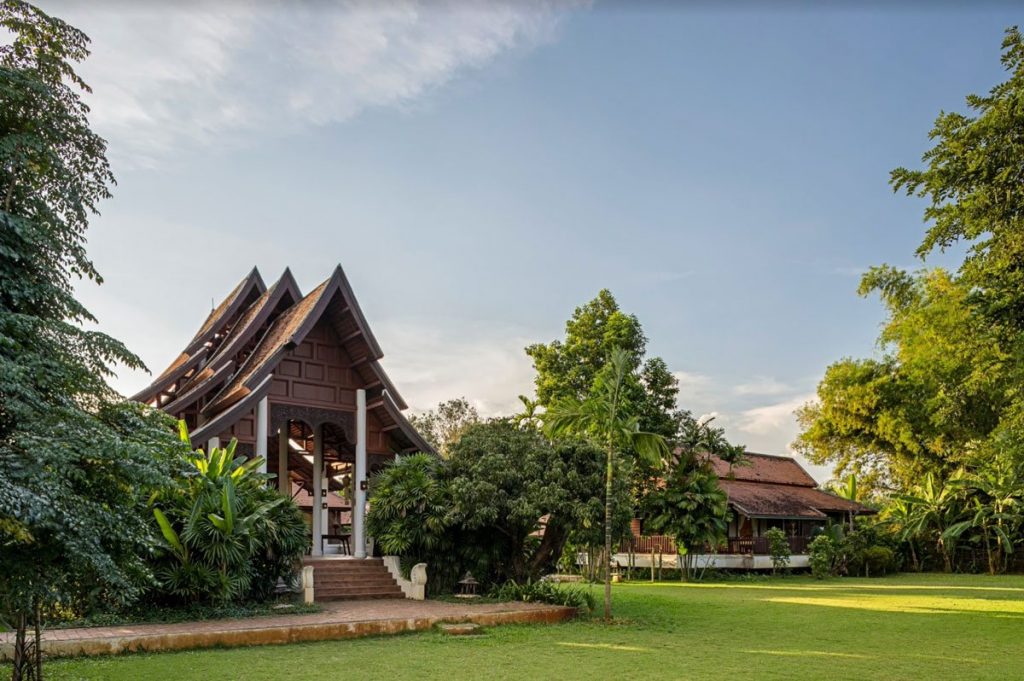
The Dawn Wellness Centre and Rehab is the only treatment centre in Asia-Pacific accredited by CARF International, the stamp of approval held by the most respected treatment centres in America. Set on the riverside outside Chiang Mai in northern Thailand, away from the bars and party scenes associated with other parts of the country, it has treated more than 1,500 international clients, with the largest client groups coming from the UK, the USA and Australia.
Treatment follows a structured roadmap delivered by a multidisciplinary team of Western-trained therapists, psychologists and psychiatrists, moving from professionally managed withdrawal through skills for managing triggers and cravings to the deeper work of addressing what drives the addiction, including a dedicated programme for co-occurring trauma.
The results are measurable: 91% of clients show measurable improvement in depression scores and 85% in anxiety scores by discharge, 90% of clients complete their programme, and if a client relapses within the first year, The Dawn provides 28 days of additional treatment at no cost. Aftercare is free for life, with twice-weekly online group sessions connecting alumni across the world.
If you are considering treatment abroad for yourself or someone you love, the simplest next step is a confidential conversation. Our admissions team can talk through your situation, explain the programme and travel arrangements, and help you decide whether The Dawn is the right fit. Reach out today; you do not have to work this out alone.

Frequently asked questions
Q. Is rehab abroad worth it?
A: For many people, yes. Treatment abroad offers immediate admission, privacy, distance from triggers and accredited care at around one third of Western prices. It suits people who can travel safely and who benefit from a full reset; your decision should rest on clinical fit, verified through a proper assessment, rather than cost alone.
Q. How long should I go abroad for treatment?
A: Most residential programmes run from four to twelve weeks. Longer stays allow deeper work on the causes underneath the addiction, and research from the National Institute on Drug Abuse links longer treatment duration with stronger outcomes. A clinical assessment will recommend a length based on your situation.
Q. Can I use my insurance for treatment abroad?
A: Often, yes. Several international and UK insurers cover accredited overseas treatment, while US Medicare generally does not apply outside the United States. The reliable route is to ask the centre’s admissions team to check your specific policy before you commit.
Q. Do I need a special visa to go to rehab in Thailand?
A: Many nationalities can enter Thailand without a visa for shorter stays, and longer programmes can usually be accommodated through standard extensions. Rules change, so confirm current requirements with official Thai immigration sources; a good admissions team will guide you through the practicalities for your nationality.
Q. Can my family be involved while I am abroad?
A: Yes. Distance does not exclude family from recovery. Established centres schedule family involvement deliberately, through updates with your consent, structured family sessions online, and guidance for relatives on how to support you when you return home.