Yes, treatment at an accredited, licensed centre in Thailand is safe, and for many people it is safer than waiting months for help at home. But Thailand’s treatment industry covers a wide range, from internationally accredited centres to places with very little oversight, so safety comes down to knowing how to tell them apart. This guide shows you exactly how.
If you are asking this question, you are probably carrying a few specific doubts: whether medical standards in Thailand match those at home, whether the clinical team will speak fluent English, and what happens if something goes wrong so far away. Those are the right questions to ask, and this guide answers each one, with the checks that separate a genuinely safe centre from one to avoid. And if you are researching on behalf of someone you love, the same checks apply; our guide to arranging rehab abroad for a loved one walks through the family side step by step.
How safe is rehab in Thailand?
At a properly accredited and licensed centre, yes. Thailand is one of the world’s leading destinations for medical and addiction treatment, with modern private hospitals in every major city and a well-established residential treatment sector. Safety is not a matter of the country; it is a matter of the individual centre’s accreditation, medical provision and clinical governance. A centre that holds international accreditation and national licensing, employs qualified clinicians, and can explain its emergency procedures plainly is a safe environment. One that cannot is best avoided, wherever in the world it happens to be.
Are medical standards in Thailand as high as at home?
This is the doubt sitting underneath most safety questions, and it deserves a direct answer: yes. Thailand has one of the largest networks of internationally accredited private hospitals in Asia and treats millions of international visitors seeking medical care every year. The private hospitals that established centres work with are modern, well-equipped and accustomed to international clients, which is precisely why Thailand became a global destination for treatment in the first place.
Language is rarely the barrier people expect either. English is the working language of international treatment centres in Thailand. At The Dawn, therapy is delivered entirely in English by a Western-trained clinical team, and the admissions and support staff you deal with speak English throughout your stay.
What makes a rehab in Thailand safe?
Four things, in order of importance. Together they are what separates a safe centre from a risky one.
Does the centre hold CARF International accreditation? This is the first question to ask, because CARF is the only independent, third-party review of clinical practice, client safety and outcomes in this space. Accreditation is earned through external audit, not purchased, and it is the benchmark carried by leading treatment centres in the United States. The Dawn is Asia’s only CARF-accredited centre.
Is the centre licensed by the Thai Ministry of Public Health? Licensing is the legal baseline for any centre operating in Thailand, and it brings regular inspection against national standards. A safe centre shows you its current licence the moment you ask; treat any reluctance as a warning.
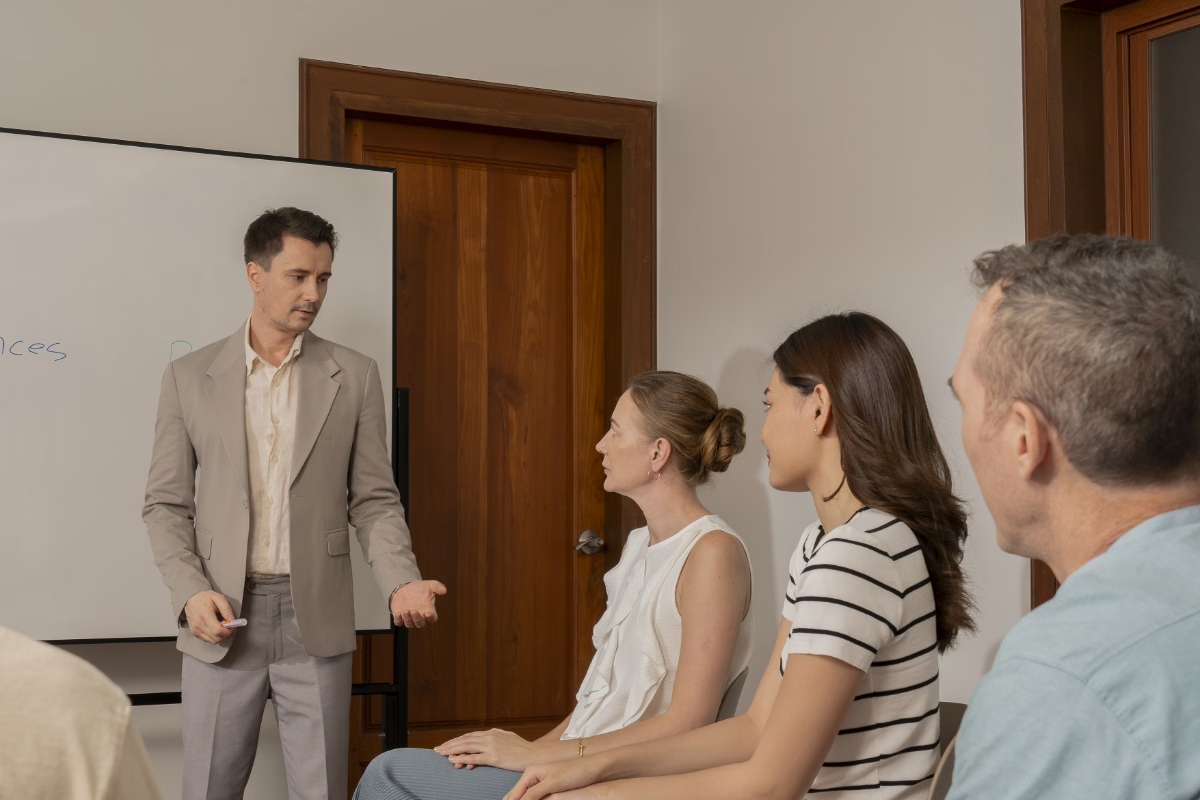
Then the clinical team and medical cover. A safe centre employs qualified, often Western-trained therapists, psychologists and psychiatrists, supported by nursing staff, rather than unqualified support workers alone. Ask who delivers the therapy and what medical supervision is available day to day.
Finally, emergency planning. A safe centre has clear escalation to nearby hospitals for medical emergencies. In The Dawn’s case, that means established links with Chiang Mai’s private hospitals and 24-hour nursing on site.
Is medical detox in Thailand safe?
At a centre with proper medical provision, yes, and this is precisely why the medical checks above matter. Withdrawal from alcohol, benzodiazepines and some other substances can be genuinely dangerous without medical supervision, which is why it should always be medically managed rather than attempted alone.
A safe centre assesses your medical needs before you travel, provides supervised withdrawal with nursing oversight and medication where appropriate, and has hospital transfer arranged for any complication. At The Dawn, professionally managed withdrawal is the first phase of treatment, with 24-hour nursing throughout at our alcohol detox in Thailand.
Is it safe and legal to travel to Thailand for treatment?
Yes. Thailand actively welcomes international visitors for medical and addiction treatment, and entering the country for care is straightforward and legal. Many nationalities can enter without a visa for shorter stays, with standard extensions available for longer programmes. Rules change, so confirm current requirements with official Thai immigration sources, and a good admissions team will guide you through the practicalities for your nationality.
Is my privacy safe at a rehab in Thailand?
At an established centre, yes, and privacy is often a reason people choose treatment abroad in the first place. Reputable centres operate strict confidentiality policies, keep secure records, and are practised at protecting the privacy of clients who need discretion for professional or personal reasons. Ask how your information is stored and who has access; the answer should be clear and reassuring.
How do I check a specific centre is safe before I book?
The checks above, condensed into the questions to ask any centre before you commit. Our full guide to choosing the best rehab abroad goes deeper on accreditation, cost and comparing centres.
| Ask the centre | What a safe answer looks like |
|---|---|
| Can you show proof of accreditation and licensing? | Current CARF International accreditation and a Thai Ministry of Public Health licence, provided in writing without hesitation. |
| Who delivers the therapy? | Named, qualified therapists, psychologists and psychiatrists whose credentials you can verify, not unqualified support workers alone. |
| How are withdrawal and medical emergencies handled? | Medically supervised withdrawal, nursing oversight around the clock, and a named nearby hospital for escalation. |
| How is my privacy protected? | A clear confidentiality policy, secure records, and a straight answer on exactly who has access to your information. |
| Can I speak to your clinical or admissions team directly? | A real conversation, offered readily. A safe centre is happy to answer all of this by phone or video, not only in messages. |
If a centre is evasive on any of these points, treat that as your answer and look elsewhere.
Why The Dawn is a safe choice for addiction treatment in Thailand
The Dawn Wellness Centre and Rehab meets every one of the checks above. It is Asia’s only CARF-accredited treatment centre, licensed by the Thai Ministry of Public Health, and staffed by a multidisciplinary team of Western-trained therapists, psychologists and psychiatrists, supported by 24-hour nursing and established links to Chiang Mai’s private hospitals for any medical need.
Safety also shows in outcomes. By discharge, 91% of clients show measurable improvement in depression scores and 85% in anxiety scores, and 90% of clients complete their programme. For added reassurance, clients who complete twelve weeks of addiction treatment and relapse within a year can return for a further 28 days of treatment at no cost.
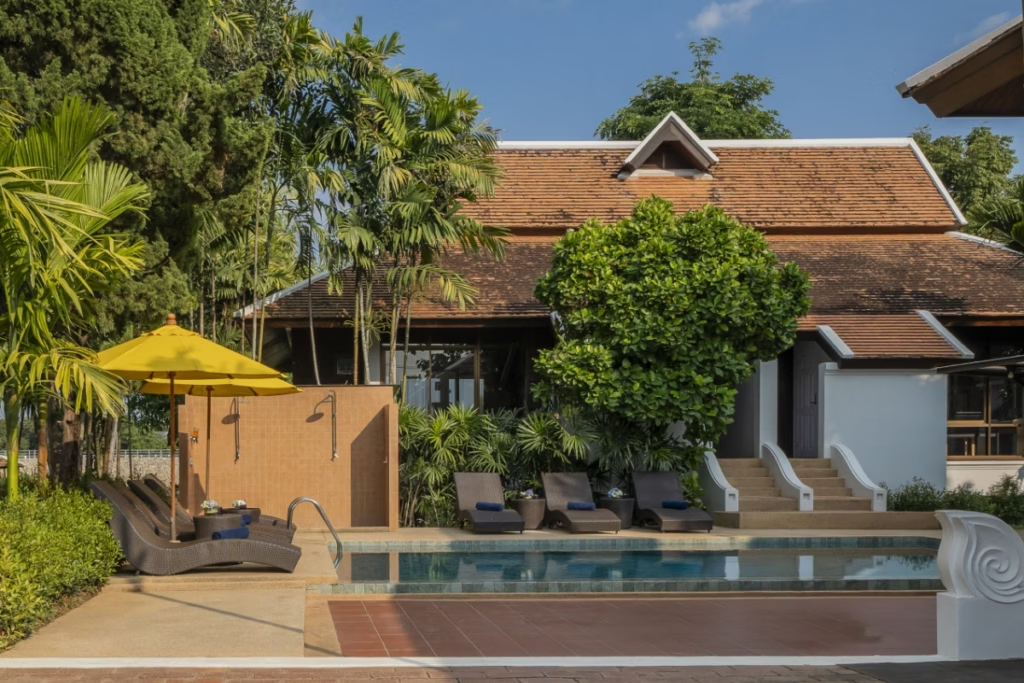
You can read more about our accreditation and clinical standards. The centre itself sits on the riverside outside Chiang Mai, a calm, secure environment built for recovery to happen safely.
Talk to us about safe treatment in Thailand
If safety is your concern, ask us anything. Our admissions team is glad to talk through our accreditation, medical provision and clinical team, and to help you assess whether The Dawn, or any centre you are considering, is the safe choice for you or your loved one.
Contact our admissions team for a confidential conversation.
Frequently asked questions
Yes. All legitimate centres must be licensed by the Thai Ministry of Public Health and inspected against national standards. The strongest centres also hold international accreditation such as CARF, which adds independent review of clinical practice and outcomes.
It depends on your situation, because withdrawal from some substances is unsafe without medical supervision. This is why a reputable centre assesses your condition before you travel and advises the safest way to do it. Sometimes that means completing detox at home first; sometimes it means starting at home to stabilise, then continuing on arrival under medical care. A reputable centre will never ask you to fly and detox on site if that puts you at risk, and it plans any medical support you need for the journey. If you are unsure whether you need to detox first, our guide to detox before flying to rehab explains how a centre makes that call.
At an established, accredited centre, yes. Look for centres with mixed clinical teams, private ensuite accommodation, and clear safeguarding policies. Ask directly about the client mix and about how privacy and comfort are managed.
A safe centre has 24-hour clinical cover and established escalation to a nearby hospital. Ask any centre to explain exactly what happens in an emergency and which hospital they use; the answer should be immediate and specific.

